- Bill Palmer

- Last Updated: June 9, 2026
- Understanding Leading Indicators
- The Role of Leadership in Shaping Safety Culture
- Conclusion
Workplace safety has traditionally focused on lagging indicators, such as the number of accidents or incidents that have already happened. However, there’s a growing recognition that we need to be more proactive regarding safety. Leading indicators are predictive and preventive measures that provide insights into the effectiveness of safety programs before incidents occur. This blog will examine how organizations can take the next step with leading indicators to enhance workplace safety.
Cority’s State of EHS+ Technology report found that 82% of organizations always or often rely on lagging indicators — incidents, violations, and claims — for after-the-fact reporting, underscoring how much room most safety programs still have to shift toward the proactive measures this post describes.
Understanding Leading Indicators
Leading indicators are proactive measures that help predict and prevent future incidents. Unlike lagging indicators, which reflect past performance, leading indicators focus on ongoing processes and behaviors that contribute to an organization’s overall safety. These indicators can include:
- Training Completion Rates – Tracking the percentage of employees who complete safety training can highlight potential knowledge gaps and areas needing improvement. For example, if certain training modules have low completion rates, it may indicate a need for additional resources or emphasis on those areas.
- Near Miss Reporting—Encouraging the reporting of near misses can provide valuable insights into potential hazards before they result in actual incidents. A robust near-miss reporting system can help identify and mitigate risks proactively. The Heinrich model suggests that for every 300 near misses, there will be 29 minor injuries and one major injury.
- Safety Audits and Inspections – Regular audits and inspections, along with tracking the resolution of findings, can indicate the effectiveness of safety protocols and the commitment to continuous improvement.
Success Through Leading Indicators
To show how leading indicators can drive measurable improvements in safety performance, consider a manufacturing company that focused on near-miss reporting and proactive safety audits. By encouraging employees to report near misses and conducting regular inspections, they can identify recurring hazards early on and implement appropriate corrective actions. Over time, this approach can reduce their incident rate, which demonstrates the power of leading indicators in preventing accidents before they happen.
Cority’s State of EHS+ Technology report found that 46% of the industry’s top performers always use leading indicators proactively, compared to just 26% of their lower-performing peers — real-world evidence that the organizations leaning into leading indicators are the ones pulling ahead on safety.
Implementing Leading Indicators
The first step is to examine the data you’re already collecting and see how you can transform it into useful leading indicators. For example, tracking attendance at safety refresher training sessions can be a great indicator of how engaged your employees are with safety processes.
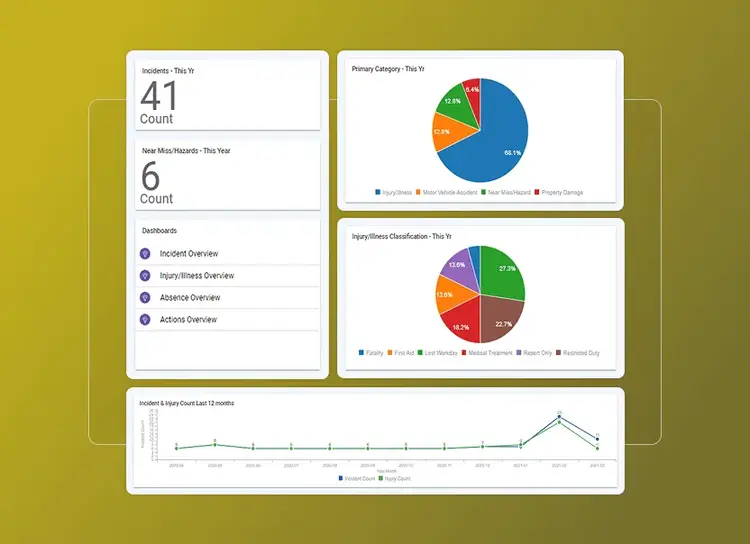
It’s important to set clear and measurable goals for each leading indicator as well. That way, you can really track your progress and keep safety at the top of your mind. Maybe you aim for 100% completion of safety training by all employees each quarter, and you regularly measure how you’re doing against that goal. Of course, getting buy-in from leadership is crucial. Their support will ensure safety stays a priority and provide the resources it needs across the organization.
Overcoming Challenges in Adopting Leading Indicators
Implementing leading indicators comes with its own set of challenges that organizations must overcome. One common obstacle is resistance to change, as employees may be accustomed to traditional lagging indicators. To overcome this, you’ll want to provide education on the importance of leading indicators and demonstrate quick wins to gain buy-in from stakeholders. Another challenge is the potential for data overload. To address this, it’s advisable to start small by focusing on a few key indicators to avoid overwhelming staff with too much data at once. Additionally, a lack of understanding about how to use leading indicator data effectively can slow implementation. Offering comprehensive training programs that explain the interpretation and application of these metrics can help bridge this knowledge gap and ensure successful adoption.
Want to learn more? Check out our ebook, Measuring Performance: Your Guide to Health and Safety Leading Indicators
The Role of Leadership in Shaping Safety Culture
Leadership commitment is arguably the most important aspect for successfully implementing leading indicators. Leaders play the most important role in fostering a culture where proactive risk management is prioritized. To support this shift, leaders should actively model proactive behaviors by participating in safety initiatives such as audits or inspections. It’s also important for leadership to allocate adequate resources for training programs, technology investments, or new safety initiatives. Furthermore, recognizing and rewarding employees who engage in proactive risk management activities, such as reporting near misses or completing safety training, can reinforce the importance of these practices and encourage wider participation throughout the organization.
Industry Standards and References
Incorporating industry standards adds credibility to your approach when implementing leading indicators. For instance, OSHA’s Recommended Practices for Safety and Health Programs emphasize using both lagging and leading indicators for comprehensive risk management. This balanced approach ensures that organizations are not only tracking past incidents but also actively working to prevent future ones. Similarly, ISO 45001 Occupational Health and Safety Management Systems provides valuable guidelines on integrating leading indicators into broader health and safety management systems. By aligning with these recognized standards, organizations can enhance their safety practices and demonstrate their commitment to best practices in keeping their workforce safe.
Benefits of Leading Indicators
Leading indicators give you a crystal ball view into the future, letting you anticipate potential incidents before they happen. That’s a huge advantage when workers’ lives are at stake. By focusing on these proactive measures, you can foster a culture of continuous improvement in your safety practices, which translates to fewer incidents and overall better safety outcomes.
Ultimately, embracing leading indicators helps build a stronger safety culture. It emphasizes prevention and proactive risk management, which is a critical component of safety excellence.
Actionable Takeaways
Here are some key steps organizations can take to begin focusing on leading indicators:
- Identify which leading indicators are most relevant to your operations.
- Set up systems for regular data collection through technology platforms or manual tracking.
- Engage employees at all levels by forming cross-functional safety committees or suggestion programs.
- Continuously monitor progress against goals and adjust strategies as needed.
Conclusion
Making the shift from reactive to proactive safety management is the biggest step in taking workplace safety to the next level. Focusing on predictive leading indicators allows you to anticipate with greater clarity and mitigate risks, creating a genuinely safer workplace. As more companies start using leading indicators, they see fewer incidents and an authentic culture of safety excellence taking hold. By prioritizing these forward-looking metrics alongside traditional lagging measures, organizations can create safer work environments while driving continuous improvement.
Want to learn more about Predictive Analytics? Check out our ebook, Preventing Harm Before it Happens: How to Introduce Predictive Analytics Into Your Incident Prevention Strategy
Sources
Top 5 Leading Indicators in Health and Safety: A Path to Proactive Prevention
How to Implement and Evaluate Leading Indicators
Leading and Lagging Indicators of Safety
The Role of Leadership in Shaping a Robust Safety Culture
Using Leading Indicators to Improve Safety and Health Outcomes
- Explore Related Topics
- Frameworks & Standards, Risk Management, Safety Culture, Software Configurability, Workplace Safety
We value your privacy

Bill Palmer
Bill Palmer is a Product Marketing Manager supporting Cority’s Environmental solution. Bill has worked for over 20 years in EHS with leading global companies in the chemical, consumer goods, and academia sectors. Throughout his career, Bill has operated at both the operational and executive echelons, aiding teams in the development of robust systems and EHS-oriented cultures that propel organizational success. Before joining Cority, Bill was the Corporate EHS Leader with Pilot Chemical Company. Bill is a Certified Safety Professional (CSP) and a Certified Hazardous Materials Manager (CHMM).