- Morgan Lachance

- Last Updated: June 5, 2026
- Displaying Leadership Commitment to Safety Culture
- Practicing Felt Leadership with Digital Solutions
- Increasing Employee Engagement for a Stronger Safety Culture
- Enhancing Employee Engagement with Mobile Solutions
- Measuring Safety Culture Success
- Measuring Safety Culture Success with EHS Software
Organizations globally have increased their attention towards building a strong safety culture: trying to figure out what it really is and the aspects that are necessary to develop and sustain it.
And while this debate continues, there appears to be almost unanimous agreement on one thing: developing a strong safety culture is a good thing for business.
The truth is there’s no ‘one size fits all’ model to develop a strong safety culture. However, it’s been observed that most organizations that achieve safety culture success do so by knowing how to:
- Show leadership’s commitment to safety in the workforce
- Increase employee participation and engagement in safety
- Measure and accurately assess progress toward safety excellence
Let’s take a quick look at how organizations can achieve each goal, while also understanding how they can leverage technology to support their safety culture improvement efforts.
Displaying Leadership Commitment to Safety Culture
In the excellent book entitled “From Accidents to Zero”, Dr. Andrew Sharman writes that change is most effective when it spreads through an organization like a virus, moving from one person to the next. Thus, like a virus finding an entry point into the body and spreading outward, building a culture based on a strong commitment to safety starts at the top and then trickles down through all successive organizational levels.
Cority’s State of EHS+ Technology report found that the industry’s top performers are 3X more likely than their peers to have consistently engaged leadership — the visible, felt commitment that separates strong safety cultures from weak ones.
For this viral change to occur, leaders must not simply talk about their commitment to safety – they need to show that commitment visibly.
Felt leadership is the practice of influencing hearts and minds toward shared values by being visible to and regularly engaging with the front-line, to show a genuine interest in their work and concern for their well-being.
In a very practical sense, leaders need to:
- Be visible and spend time with employees where they work, get to know them as people, show an interest in what they do, and understand what they need to do it better and safer
- Speak passionately about the importance of safety, while demonstrating a strong understanding of current risks, issues, and driving actions required to solve them
- Accept their role as a coach or mentor and provide honest, timely, and valuable feedback to employees through real-world observations of work
- Recognize and reinforce positive behaviors that support safety culture success while celebrating success along the way
An effective felt leadership approach requires that leaders develop the necessary skills to be able to engage with people on safety at an emotional level, and clearly demonstrate to them that safety is not just a priority, but a core value of the enterprise.
Practicing Felt Leadership with Digital Solutions
Observation is a key element of felt leadership. As leaders spend more time in the field, getting to know their people and how the work is actually done, they will become increasingly aware of issues that require action and follow-up. Digital tools that help leaders record critical observations directly from a mobile device ensure corrective actions can be assigned and initiated immediately, which reduces risk exposure and clearly communicates the leader’s commitment to safety.
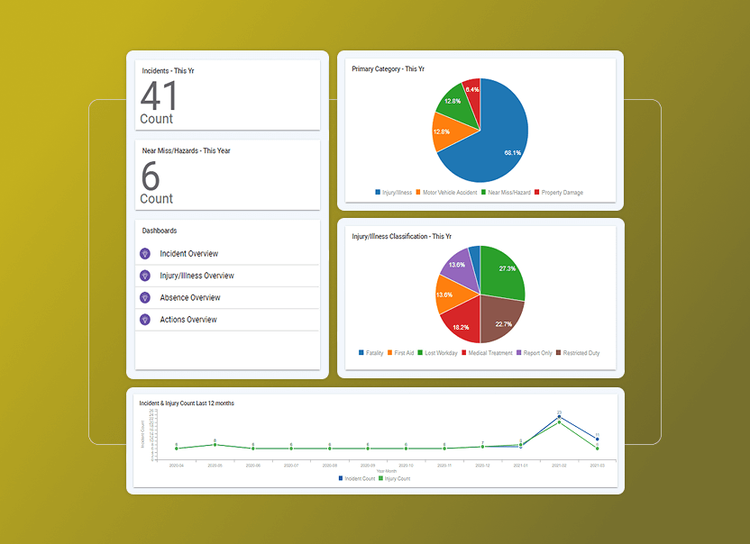
This data can help reveal whether at-risk behaviors are a result of workers making decisions due to constraints created by a poorly designed system, or whether workers are knowingly violating rules. Such data will ensure that follow-up actions are appropriate to address the underlying causes of errors and at-risk behaviors, while preserving a “just culture” within the company.
Yet, a felt leadership approach is only effective in driving culture change if it is applied consistently and rigorously. Safety software can help organizations monitor their leaders’ visibility through metrics and key indicators, holding them accountable to develop the critical leadership behaviors necessary for success, while simultaneously showing frontline workers what the company expects of its leaders.
Increasing Employee Engagement for a Stronger Safety Culture
Studies conducted by Queen’s School of Business and Gallup found that disengaged workers experience almost 50% more accidents and commit 60% more errors in their work than their more engaged peers.1 It seems logical then that any effort to improve safety culture needs to focus on ways to improve employee engagement. To that end, leaders should:
- Focus on giving workers a bigger voice: Workers who feel that their interests are not considered, and their opinions are not valued will begin to work against the interests of the organization “from the shadows”. This means organizations must look for ways to give workers more opportunity to express concerns, challenge decisions, and propose ideas. While creating ways for workers to highlight issues, leaders are encouraged to also look for ways to increase worker autonomy to fix the issues they find in the manner they believe is most appropriate.
- Trust workers with more data, not less: It’s often seen in weak safety cultures that workers feel management is hiding information from them – that they aren’t getting the real picture of what’s happening. Sharing data in real time allows workers to assess for themselves the state of safety and where they can contribute. Better communication will promote a narrative that there are no secrets and that management is open to being challenged and held accountable.
- Develop a responsive culture: There’s a double-edged sword with respect to employee engagement. If you are asking workers for their opinions and what’s going wrong, then you’d better be prepared to do something about it. Failure of leaders to respond to issues brought forward in a reasonable time will erode trust with the workforce and discourage further participation (“Why should I inspect if management won’t do anything about it?”). To that end, organizations need to ensure they dedicate sufficient resources and commitment to fixing problems to ensure engagement remains high.
Enhancing Employee Engagement with Mobile Solutions
Mobile EHS solutions afford businesses excellent ways to engage their employees and get them more involved in safety. Tools that allow workers to submit hazard reports, incidents and suggestions from their mobile device, without having to track down their supervisor, emphasizes autonomy while ensuring issues are integrated into workflows leading to quicker assignment and resolution. These applications also lead to greater transparency, since workers can easily track action status and review metrics to hold their leaders accountable, where required. In-app notifications also ensure they are immediately aware when they are assigned tasks, so they can contribute equally toward safety goals.
Digital tools provide workers with the vital data they need, whether it’s job hazard analyses, work instructions, or SDS, without having to dig through dusty binders or track down their supervisor, allowing them to make better decisions that lead to better safety and business outcomes.
Measuring Safety Culture Success
There are obvious reasons why measuring safety culture is a good idea: It allows you to assess success of specific initiatives, it provides objective evidence of safety culture’s impact on other key business levers, and it helps make the business case for health and safety investment. But, how do you measure success in safety? More specifically, how do you measure improvement in safety culture?
Measuring safety culture is difficult and organizations often struggle to do just that due to the lack of consensus on how to measure it. While researchers have been using surveys to measure worker perception of organizational safety since the early 1980s, we know that perceptions can change quickly based on current circumstances.
To effectively measure safety culture, we need to use a variety of tools to build a complete picture of what’s going on. In a 2000 study, Dominic Cooper proposed that safety culture is essentially composed of 3 interconnected aspects 2:
- A psychological aspect that encompasses the attitudes, beliefs, perceptions and values held across the organization. This is often referred to as safety climate, specifically “how we feel about safety.” This aspect is normally measured via questionnaires and interviews.
- A behavioral aspect that concerns the specific actions and behaviors exhibited by employees in an organization to advance safety. It is generally described as “what we do for safety”. Organizations must consider what specific behaviors they believe all employees must demonstrate in order to improve safety culture. Once defined, these behaviors should be measured and communicated daily, and leaders must not only advocate for these behaviors, but model them to the workforce.
- A situational aspect that describes the structure and resources of the organization’s safety system reflected in its policies, procedures, workflows and controls. It is commonly defined as “what we have to realize safety”. This aspect is most often measured via audits, and indicators derived from audits (i.e. % of actions closed).
Any organization looking to measure their safety culture accurately should consider all three aspects. These aspects can be measured individually or compiled to provide a single metric that could be used to evaluate the impact of safety culture improvement on other key indicators.
Want to learn more? Check out our blog, Understanding Key Indicators and Metrics for Management of Change
Measuring Safety Culture Success with EHS Software
Companies are immersed in data, but how they use that data to make better decisions that lead to better cultures and fewer injuries and illnesses is key. EHS software affords businesses the opportunity to dive further into their “big data”, to identify key trends and insights that will enable them to determine what’s working, and where further effort is required. As data analytics and insights improve, so will greater capabilities to predict where the next failure will occur, enabling us to respond before such failure results in loss.
Understanding and communicating the importance of safety culture is a good first step toward protecting people sustainably. Businesses, however, need to ensure that their words are matched with tangible actions to ensure safety culture is not simply an interesting buzzword or unintentional consequence, but rather becomes a guiding philosophy across the entire organization.
Sources
1 Boeldt, M. 2017. “How engaged workers are safe employees”. Accessed from: https://www.ehstoday.com/safety/article/21919203/how-engaged-workers-are-safeemployees
2 Cooper, M.D. 2000. Toward a model of safety culture. Safety Science. 36(2000): 111-136.
- Explore Related Topics
- Digital Transformation, Employee Engagement, Mobile & Remote EHS, Safety Culture, Workplace Safety
We value your privacy

Morgan Lachance
Morgan Lachance was Cority's Content Marketing Manager. In her role, she supported Cority's digital marketing programs with a focus on creating new content to increase brand awareness, accelerate quality lead generation, and positively impact digital marketing KPIs.